Hay un terremoto. Cientos de personas. Madres que murieron salvando a sus bebés. Familias todavía bajo los escombros. Cientos más, desaparecidas. Hospitales llenos, sin recursos suficientes. Un gobierno que no protege a su gente.
There is an earthquake. Hundreds of people. Mothers who died saving their babies. Families still under the rubble. Hundreds more, disappeared. Hospitals full, without enough resources. A government that does not protect its people.
Y al mismo tiempo hay una fiesta. El Mundial. Atletas mostrando lo que cuesta ser de los mejores del mundo. Historias de vida que no conocía y que, una por una, me conmueven. Gente que se abraza. Países que se unen en el deporte que más une.
And at the same time there is a celebration. The World Cup. Athletes showing what it costs to be among the best in the world. Life stories I'd never heard, and one by one they move me. People embracing. Countries uniting through the sport that unites the most.
Estas dos cosas, pasando exactamente a la vez. Y sé que así como en Venezuela, hay muchos otros países pasando por guerras, muertes, desapariciones —incluyéndonos aquí en México.
These two things, happening at exactly the same time. And I know that, just like in Venezuela, there are many other countries going through wars, deaths, disappearances —including us here in Mexico.
El día que vi la noticia de Venezuela, la cambié en un segundo. Escogí no ver los detalles. Cerré los ojos por un segundo esperando que no fuera tan grave, que todos estuvieran bien. Y seguí viendo las reacciones de la gente al ver cómo la ola del Mundial activa muchos corazones —aunque también el sentimiento me llega, pero de lo otro: de ver a la gente abrazar, incluir, proteger, unir.
The day I saw the news from Venezuela, I changed the channel in a second. I chose not to see the details. I closed my eyes for a second, hoping it wasn't that bad, that everyone was okay. And I kept watching people's reactions to how the wave of the World Cup stirs so many hearts —though the feeling reaches me too, but from the other side: from watching people embrace, include, protect, unite.
Duré un día evadiendo. Y lo sabía.
I spent a day avoiding it. And I knew it.
En el momento en que me permití ver, la fiesta ya no se sintió igual.
The moment I let myself see, the celebration no longer felt the same.
Creo que sí. Y no creo que sea incoherencia. Es poder sentir dos cosas a la vez sin que una cancele a la otra.
I think I can. And I don't think it's incoherence. It's being able to feel two things at once without one cancelling the other.
Hay una diferencia entre no dejarme sentir nunca —anestesia— y elegir cuándo dejo entrar el dolor para no perderme en él. Una es huir del dolor. La otra es no romperme, para poder seguir viendo.
There's a difference between never letting myself feel —numbness— and choosing when to let the pain in so I don't lose myself in it. One is running from the pain. The other is not breaking, so I can keep seeing.
¿Por qué no queremos mirar?Why don't we want to look?
Hubo madres de hijos desaparecidos que se pararon frente al mundo. Y hubo quien dijo que ese no era el lugar.
There were mothers of disappeared children who stood up in front of the world. And there were those who said that wasn't the place.
¿Lo es? ¿No lo es?
Is it? Isn't it?
Es una plataforma al mundo entero. Es exactamente donde lo que no se ve debería verse. La incomodidad que provocan no prueba que estén fuera de lugar. Prueba que están funcionando.
It's a platform to the whole world. It's exactly where what goes unseen should be seen. The discomfort they cause doesn't prove they're out of place. It proves they're working.
Entonces la pregunta no es sobre ellas. Es sobre nosotros. ¿Por qué no queremos mirar? ¿Por qué nos conformamos? ¿Por qué preferimos lo divertido, la fiesta, el éxito?
So the question isn't about them. It's about us. Why don't we want to look? Why do we settle? Why do we prefer the fun, the celebration, the success?
¿Qué pasaría si miramos? O más bien: ¿qué pasa cuando miramos?
What would happen if we looked? Or rather: what happens when we look?
Este proceso lo observé en mí cuando veía los escombros y a la gente tratando de moverlos con sus propias manos y las pocas herramientas. Me escuché pensar e imaginarme diciéndome que no tenía la capacidad de ayudar… y después me corregí: sí hay opciones, la cuestión es pensar. Empecé a buscarlas, encontré varias y decidí actuar. Buscaban traductores y les mandé mi contacto; buscaban apoyo emocional y les escribí a varios para ver si, desde mi trinchera, podía ayudar. Seguir buscando opciones me parece importante, y a la vez, no dejar de sentir el dolor me parece igual de importante. ¿Por qué? ¿Qué pasaría si la gente con poder y con grandes recursos se permite practicar sentir el dolor? Quizás muchos ayudarían.
I watched this process in myself as I saw the rubble and people trying to move it with their own hands and the few tools they had. I heard myself think, telling myself I had no capacity to help… and then I corrected myself: there are options; the point is to think. I started looking, found several, and decided to act. They needed translators and I sent my contact; they needed emotional support and I wrote to several people to see if, from my own corner, I could help. To keep looking for options feels important to me —and at the same time, not stopping the feeling of the pain feels just as important. Why? What would happen if people with power and great resources let themselves practice feeling the pain? Maybe many would help.
Todo empieza con una decisión minúsculaIt all starts with a tiny decision
Hace algunos años entrevisté a una persona que había elegido cometer los peores actos de violencia contra otra persona. Le pregunté cómo había llegado a esa decisión.
A few years ago I interviewed a person who had chosen to commit the worst acts of violence against another. I asked how they had arrived at that decision.
Su respuesta me marcó para siempre.
Their answer marked me forever.
Me dijo que le ofrecieron un trabajo que pagaba más de lo que había ganado en toda su vida. Vendía comida viajando de un pueblo a otro, horas de camino, y volvía cada día con algo de dinero para su familia. Ese día, el cheque tenía más ceros de los que jamás había imaginado. Y le fue muy fácil decir que sí.
They told me they were offered a job that paid more than they had earned in their entire life. They sold food, traveling from town to town, hours on the road, returning each day with a little money for their family. That day, the check had more zeros than they had ever imagined. And it was very easy to say yes.
Ese día solo iba a manejar a un grupo. No sabía lo que el grupo haría. Después le ofrecieron más, y más. Hasta que terminó haciendo cosas terribles.
That day they were only going to drive a group. They didn't know what the group would do. Then they were offered more, and more. Until they ended up doing terrible things.
¿Sería honesta conmigo? Quizás. Quizás no. Pero algo de lo que dijo sí lo era: que no tenía nada que perder. Que cargaba una condena que necesitaría varias vidas para pagar.
Were they being honest with me? Maybe. Maybe not. But something they said was true: that they had nothing to lose. That they carried a sentence that would take several lifetimes to pay.
Sí. El primer paso casi siempre es así de fácil. No porque la persona sea un monstruo, sino porque ese día no estaba decidiendo "voy a hacer cosas terribles". Estaba decidiendo "manejo un coche y cobro un cheque".
Yes. The first step almost always is that easy. Not because the person is a monster, but because that day they weren't deciding "I'm going to do terrible things." They were deciding "I'll drive a car and cash a check."
El horror no estuvo en un momento monstruoso. Estuvo en la ausencia de un solo momento donde se sintiera monstruoso.
The horror wasn't in a monstrous moment. It was in the absence of a single moment where it felt monstrous.
Y el "no tenía nada que perder" es la pieza clave. La desesperación vacía el lado del costo. Cuando no hay nada que perder, no hay freno. Eso no lo justifica. Lo explica.
And "nothing to lose" is the key piece. Desperation empties the cost side. When there's nothing to lose, there's no brake. That doesn't justify it. It explains it.
La misma físicaThe same physics
Aquí es donde se une todo. Los atletas que me conmovieron y el hombre que entrevisté son el mismo fenómeno, apuntando en direcciones opuestas.
This is where it all comes together. The athletes who moved me and the man I interviewed are the same phenomenon, pointed in opposite directions.
Hacia arriba
- Nadie se vuelve de los mejores del mundo en un día
- Miles de decisiones minúsculas
- Algo que construir
Hacia abajo
- Nadie termina enterrando cuerpos en un día
- Las mismas decisiones minúsculas
- Nada que perder
Upward
- No one becomes one of the best in the world in a day
- Thousands of tiny decisions
- Something to build
Downward
- No one ends up burying bodies in a day
- The same tiny decisions
- Nothing to lose
La misma física. Lo único que cambia la pendiente es qué tienes en juego: algo que construir, o nada que perder —o por lo menos eso pensamos.
The same physics. The only thing that changes the slope is what you have at stake: something to build, or nothing to lose —or at least that's what we think.
Del tamaño de un pastelThe size of a piece of cake
Por eso me gusta el ejemplo más pequeño que existe.
That's why I love the smallest example there is.
Así como es fácil comerse el pastel, es fácil no comérselo. Las dos cosas estaban disponibles. Las dos eran fáciles en ese segundo. Y las dos construyen algo.
Just as it's easy to eat the cake, it's easy not to eat it. Both were available. Both were easy in that second. And both build something.
Nos contamos que la decisión buena es difícil y la otra es fácil. No. La diferencia no es la dificultad. Es si vemos que estamos eligiendo. Y si, una vez que lo vemos, nos permitimos sentir el peso de esa decisión —y ser honestos.
We tell ourselves the good decision is hard and the other one is easy. No. The difference isn't difficulty. It's whether we see that we're choosing. And whether, once we see it, we let ourselves feel the weight of that decision —and be honest.
Cada vez que elegimos ver —aunque duela, aunque arruine la fiesta— le damos peso al lado del costo. Estamos construyendo el freno que aquel hombre no tenía.
Every time we choose to see —even if it hurts, even if it ruins the celebration— we give weight to the cost side. We're building the brake that man didn't have.
Esa es la respuesta a "¿qué estamos construyendo adentro?". Estamos construyendo la capacidad de que la próxima decisión minúscula tenga testigo.
That's the answer to "what are we building inside?" We're building the capacity for the next tiny decision to have a witness.
AdueñarseOwning it
Conozco a alguien que está batallando mucho con los efectos de sus decisiones. Pero no los ve como sus efectos.
I know someone who is struggling a lot with the effects of their decisions. But they don't see them as their effects.
Adueñarme de una decisión, en algunas circunstancias, es de lo más difícil que existe. Porque ver mi papel en la causa me quita el consuelo de ser solo víctima de las circunstancias. Pesa menos cargar "me pasó" que "lo elegí".
Owning a decision, in some circumstances, is one of the hardest things there is. Because seeing my role in the cause takes away the comfort of being only a victim of circumstance. It's lighter to carry "it happened to me" than "I chose it."
No siempre estamos abiertos a ver ese cruce. A veces solo escogemos permanecer cerca, para cuando decidamos mirar.
We're not always open to seeing that crossing. Sometimes we just choose to stay close, for when we decide to look.
¿Por qué estoy aquí?Why am I here?
Traje esa pregunta durante horas. No porque quisiera entender. Porque quería ver. Aumentar mi capacidad de ver lo real, sus interconexiones, sus causas, sus efectos.
I carried that question for hours. Not because I wanted to understand. Because I wanted to see. To increase my capacity to see what's real, its interconnections, its causes, its effects.
No tengo la respuesta a por qué estamos aquí. Pero noto lo que hace la pregunta: convierte el dolor en algo que enseña, no solo en algo que castiga.
I don't have the answer to why we're here. But I notice what the question does: it turns pain into something that teaches, not only something that punishes.
Y la pregunta de verdad, la que sí se puede contestar hoy, es más pequeña y más grande a la vez: ¿Qué queremos para nosotros mismos? ¿Qué tipo de experiencia de vida?
And the real question, the one you can actually answer today, is smaller and bigger at the same time: What do we want for ourselves? What kind of life experience?
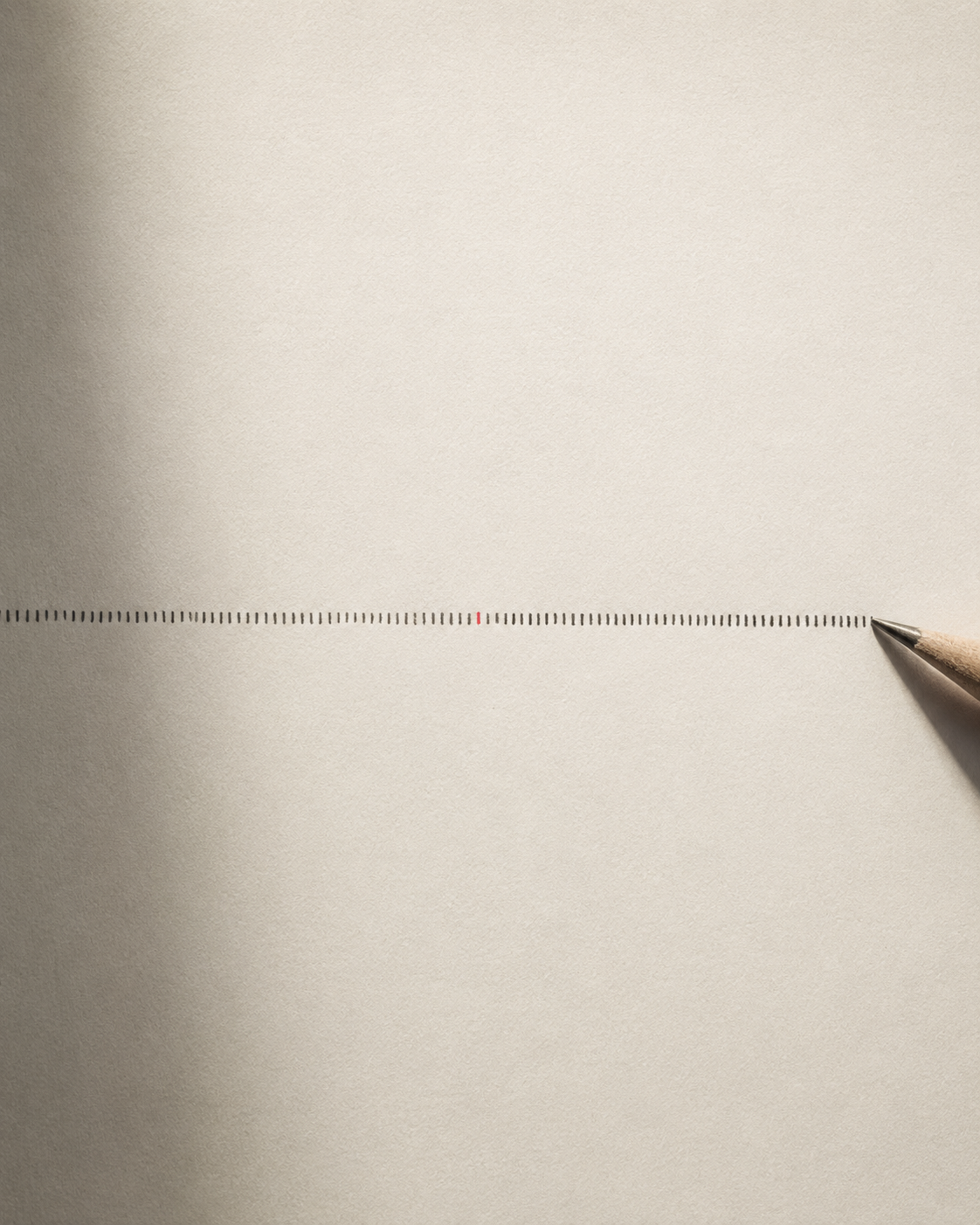
Nuestra vida no nos está pasando. La estamos escribiendo. Un milímetro a la vez.
Our life isn't happening to us. We're writing it. A millimeter at a time.