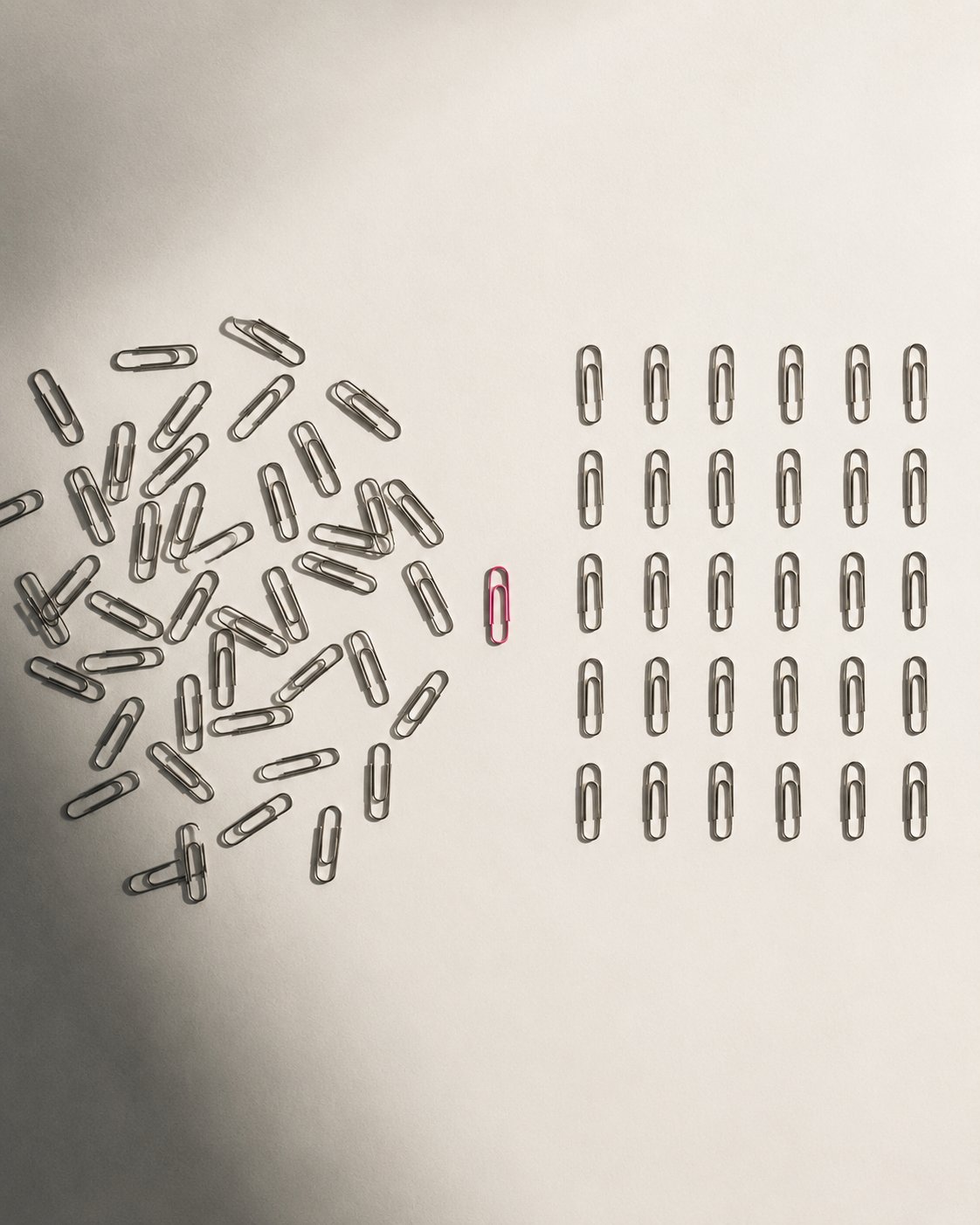
Sobre el balance entre caos y orden, y por qué la pregunta importa
On the balance between chaos and order, and why the question matters
Durante años asumimos que el caos era el problema y el orden era la solución. Que si algo no funciona, es porque falta estructura. Que si alguien no ejecuta, es porque le falta disciplina. Esa lógica es demasiado simple — y en los mejores líderes, puede ser completamente falsa.
For years we assumed chaos was the problem and order was the solution. That if something isn't working, it's because structure is missing. That if someone doesn't execute, it's because they lack discipline. That logic is too simple — and in the best leaders, it can be completely false.
Hay una pregunta que me persigue desde que empecé a pensar en serio sobre cómo crecen las organizaciones: ¿por qué hay personas que tienen todo el talento del mundo, toda la visión, toda la energía — y aun así no logran que lo que construyen los sobreviva?
There's a question that has followed me since I began thinking seriously about how organizations grow: why are there people who have all the talent in the world, all the vision, all the energy — and still can't get what they build to outlast them?
La respuesta más fácil es "les falta estructura." La más honesta es más incómoda: tienen demasiado caos para el nivel de orden que han construido. Y la diferencia importa, porque la solución es completamente distinta.
The easiest answer is "they lack structure." The more honest one is more uncomfortable: they have too much chaos for the level of order they've built. And the difference matters, because the solution is completely different.
Una definición que nadie nos enseñóA definition no one taught us
El caos, en su forma más pura, es ausencia de restricción. Sin reglas, sin consecuencias predecibles, sin estructura que guíe qué pasa después de qué. Eso suena malo — y en exceso, lo es. Pero hay algo que el caos tiene que el orden no puede generar por sí solo: posibilidad irrestricta.
Chaos, in its purest form, is the absence of restriction. No rules, no predictable consequences, no structure to guide what happens after what. That sounds bad — and in excess, it is. But there's something chaos has that order can't generate on its own: unrestricted possibility.
El caos puro es el estado donde todo puede pasar. Donde una idea puede conectar con otra sin pedir permiso. Donde la velocidad de pensamiento no está frenada por lo que "se hace normalmente." Eso es donde nacen las ideas que cambian industrias.
Pure chaos is the state where anything can happen. Where one idea can connect with another without asking permission. Where the speed of thought isn't held back by what "is normally done." That's where the ideas that change industries are born.
El orden, en su forma más pura, es lo contrario: consecuencias predecibles, roles claros, reglas que todos conocen y siguen. Eso también suena bien — y en exceso, también tiene un costo. El orden llevado al extremo se convierte en obediencia. En ejecución sin criterio. En una empresa que funciona perfectamente para el mundo de hace diez años.
Order, in its purest form, is the opposite: predictable consequences, clear roles, rules everyone knows and follows. That also sounds good — and in excess, it also has a cost. Order taken to the extreme becomes obedience. Execution without judgment. A company that works perfectly for the world of ten years ago.
"No hay creatividad sin caos. No hay valor sin orden. El problema no es tener demasiado de uno — es no tener suficiente del otro."
"There's no creativity without chaos. There's no value without order. The problem isn't having too much of one — it's not having enough of the other."
La creatividad no vive en el caos puro ni en el orden puro. Vive exactamente en la tensión entre los dos. En el lugar donde una idea desordenada encuentra la estructura suficiente para convertirse en algo real.
Creativity doesn't live in pure chaos or pure order. It lives exactly in the tension between the two. In the place where a messy idea finds enough structure to become something real.
El diagrama que nadie dibujaThe diagram no one draws
Imagina un eje. En los extremos: locura. Una locura creativa en el polo del caos absoluto — ideas que no aterrizan, energía que no produce, potencia que se consume a sí misma. Y otra locura en el polo del orden absoluto — ejecución sin pensamiento, obediencia sin criterio.
Imagine an axis. At the extremes: madness. A creative madness at the pole of absolute chaos — ideas that never land, energy that produces nothing, power that consumes itself. And another madness at the pole of absolute order — execution without thought, obedience without judgment.
En el centro: balance. No como punto fijo, sino como zona activa donde el caos y el orden se tensionan de forma productiva.
At the center: balance. Not as a fixed point, but as an active zone where chaos and order tension each other productively.
Suficiente caos para generar ideas que otros no pueden ver. Suficiente orden para convertirlas en valor que otros pueden entregar. El balance no es la ausencia de tensión — es la tensión bien administrada.
Enough chaos to generate ideas others can't see. Enough order to turn them into value others can deliver. Balance isn't the absence of tension — it's tension well managed.
Esto importa porque cambia completamente la pregunta. Cuando una empresa no funciona, la pregunta no es "¿cómo le metemos más orden?" La pregunta es: ¿dónde está el balance roto, y hacia qué lado?
This matters because it completely changes the question. When a company isn't working, the question isn't "how do we add more order?" The question is: where is the balance broken, and toward which side?
Cuando el caos es el activo y también el riesgoWhen chaos is the asset and also the risk
Existe un perfil de líder que vive naturalmente en el lado del caos. Alta velocidad creativa, conexiones que otros no ven, metodología propia que funciona de manera brillante — pero que vive en su cabeza, no en el sistema.
There's a type of leader who naturally lives on the chaos side. High creative speed, connections others don't see, their own methodology that works brilliantly — but that lives in their head, not in the system.
Este tipo de líder construye empresas extraordinarias. Sus proyectos son únicos. Sus clientes lo buscan a él, no a la empresa. Y ahí está exactamente el problema: cuando él se va, la magia se va.
This kind of leader builds extraordinary companies. Their projects are unique. Their clients seek out them, not the company. And that's exactly where the problem is: when they leave, the magic leaves.
No porque algo esté roto. Sino porque el caos que genera el valor no tiene aún el orden suficiente para existir sin él.
Not because something is broken. But because the chaos that generates the value doesn't yet have enough order to exist without them.
La solución no es reducir su caos — eso sería matar lo que lo hace valioso. La solución es construir suficiente orden para que esa energía pueda fluir a través de otros, producir con otros, y eventualmente sobrevivirlo.
The solution isn't to reduce their chaos — that would kill what makes them valuable. The solution is to build enough order so that energy can flow through others, produce with others, and eventually outlast them.
"El objetivo no es bajar la potencia. Es construir los canales para que esa potencia llegue más lejos."
"The goal isn't to lower the power. It's to build the channels so that power reaches further."
Lo que esto tiene que ver contigoWhat this has to do with you
Antes de leer esto como teoría sobre alguien más, vale la pena hacerse la pregunta en primera persona: ¿dónde vivo yo en este eje?
Before reading this as a theory about someone else, it's worth asking the question in the first person: where do I live on this axis?
¿Eres alguien que genera ideas más rápido de lo que puede ejecutarlas? ¿Que sabe exactamente cómo funciona algo pero no logra que otros lo hagan sin ti? ¿Que tiene metodologías claras en la cabeza que nunca terminan de aterrizarse en el sistema? Estás del lado del caos — y eso no es malo. Es el punto de partida para construir el balance.
Are you someone who generates ideas faster than you can execute them? Who knows exactly how something works but can't get others to do it without you? Who has clear methodologies in your head that never quite land in the system? You're on the chaos side — and that's not bad. It's the starting point for building the balance.
¿O eres alguien que ejecuta perfectamente pero que siente que la empresa está operando hacia atrás, que falta la visión que la mueva hacia adelante, que el sistema existe pero no produce nada nuevo? Estás del lado del orden — y también es un punto de partida válido.
Or are you someone who executes perfectly but feels the company is operating backward, that it's missing the vision to move it forward, that the system exists but produces nothing new? You're on the order side — and that's also a valid starting point.
El trabajo no es migrar de un polo al otro. Es identificar qué le falta al que tienes, y construirlo sin perder lo que ya funciona.
The work isn't to migrate from one pole to the other. It's to identify what the one you have is missing, and build it without losing what already works.
En The Line trabajamos exactamente en esa tensión. No llegamos a imponer orden sobre el caos — llegamos a construir el balance que permite que ambos coexistan de forma productiva. Que las ideas se conviertan en valor. Que lo que un fundador sabe hacer solo, eventualmente lo pueda hacer el sistema.
At The Line we work exactly in that tension. We don't come to impose order over chaos — we come to build the balance that lets both coexist productively. So ideas turn into value. So what a founder knows how to do alone, the system can eventually do.
Eso, en el fondo, es lo que hace crecer a una empresa sin romperla en el proceso.
That, at its core, is what makes a company grow without breaking it in the process.