Sobre lo que sabemos, lo que hacemos, y la distancia entre los dos
On what we know, what we do, and the distance between the two
Hay dos cosas que sé con certeza sobre mí misma.
There are two things I know with certainty about myself.
Quiero comodidad. Y tengo un miedo profundo a perder a las personas que amo.
I want comfort. And I have a deep fear of losing the people I love.
Eso es todo. Eso es lo que maneja casi la mayoría de mis decisiones cuando no estoy prestando atención. Y la pregunta honesta con la que he estado sentada últimamente es: si todos operáramos desde esas dos cosas — nuestra comodidad y la seguridad de los nuestros — ¿el mundo sería mejor? No. Solo sería un mundo lleno de gente protegiendo su propio círculo. Miope. Cerrado. Egoísta, aunque no se sienta así.
That's all. That's what drives almost most of my decisions when I'm not paying attention. And the honest question I've been sitting with lately is: if we all operated from those two things — our comfort and the safety of our own — would the world be better? No. It would just be a world full of people protecting their own circle. Myopic. Closed. Selfish, even if it doesn't feel that way.
La palabraThe word
He estado pensando en una palabra. Conciencia.
I've been thinking about a word. Conscience.
¿Existe algo así? Y si existe — ¿qué rayos es?
Does such a thing exist? And if it does — what on earth is it?
La busqué. La pregunté dentro de mi cabeza. Me pregunté cómo la usan en otros idiomas — el francés, el ruso, el chino, el griego, el español — ¿cambia la traducción algo esencial? ¿Quién inventó esta palabra, y qué estaba tratando de nombrar?
I looked it up. I asked it inside my head. I wondered how it's used in other languages — French, Russian, Chinese, Greek, Spanish — does the translation change something essential? Who invented this word, and what were they trying to name?
Porque no se siente igual decir "soy consciente" que "tengo conciencia." Una habla de darse cuenta. La otra habla de algo de lo que eres responsable. Algo que o desarrollas o abandonas. Algo que, llegué a creer, no te dan — se construye. Se gana. Se ejercita, como un músculo que o entrenas o dejas atrofiar.
Because it doesn't feel the same to say "I am aware" as "I have a conscience." One speaks of noticing. The other speaks of something you're responsible for. Something you either develop or abandon. Something that, I came to believe, isn't given to you — it's built. It's earned. It's exercised, like a muscle you either train or let atrophy.
La palabra más difícilThe hardest word
Y luego está la moralidad. Que quizás es la palabra más difícil.
And then there's morality. Which is perhaps the hardest word.
La capacidad de distinguir entre el Bien y el Mal. Y no solo distinguir — sino elegir el bien. Y actuar en consecuencia.
The capacity to distinguish between Good and Evil. And not just to distinguish — but to choose good. And to act accordingly.
Simple, hasta que preguntas: ¿el bien de quién? ¿Cómo sabemos si algo es bueno, o si simplemente lo estamos justificando para nuestro propio beneficio? ¿Cómo define la humanidad el Bien y el Mal — no en teoría, no en clase de filosofía, sino honestamente, en el momento, cuando cuesta algo?
Simple, until you ask: whose good? How do we know if something is good, or if we're simply justifying it for our own benefit? How does humanity define Good and Evil — not in theory, not in a philosophy class, but honestly, in the moment, when it costs something?
He pensado en preguntarle a todos los AIs del mundo. He pensado en preguntarle a cada ser humano del planeta. Creo que la mayoría ni siquiera querría pensar profundamente en la pregunta. Y los que respondieran con certeza pienso que algunos dirían — "el bien son los valores humanos" — inmediatamente enfrentarían la siguiente pregunta: ¿valores humanos? Porque llevo años aprendiendo, y aún no estoy segura de poder dar una respuesta limpia.
I've thought about asking every AI in the world. I've thought about asking every human being on the planet. I think most wouldn't even want to think deeply about the question. And of those who answered with certainty, I think some would say — "good is human values" — and would immediately face the next question: human values? Because I've spent years learning, and I'm still not sure I can give a clean answer.
El mundo en que vivimos hoy no es un accidente. Es el efecto de nuestra moralidad colectiva — el peso acumulado de lo que hemos elegido priorizar, justificar, ignorar y defender como especie.
The world we live in today is not an accident. It's the effect of our collective morality — the accumulated weight of what we've chosen to prioritize, justify, ignore, and defend as a species.
Y lo que más defendemos no es el significado. Es el poder. El dinero. Tener la razón. Hacer las cosas a nuestra manera.
And what we defend most is not meaning. It's power. Money. Being right. Doing things our own way.
No la conciencia. No la moralidad. Comodidad y miedo, disfrazados de razones.
Not conscience. Not morality. Comfort and fear, disguised as reasons.
Lo que podríamos serWhat we could be
Hay conceptos que vienen a mi mente cuando pienso en lo que podríamos ser.
There are concepts that come to my mind when I think about what we could be.
Amabilidad. Compasión. Verdad. Amor. Presencia. Honestidad. Integridad. Autoreflexión. Responsabilidad.
Kindness. Compassion. Truth. Love. Presence. Honesty. Integrity. Self-reflection. Responsibility.
Y luego está lo que se interpone: Ego. Arrogancia. Miedo. Odio. Desconexión. Inclusive la Corrupción.
And then there's what gets in the way: Ego. Arrogance. Fear. Hate. Disconnection. Even Corruption.
Todos sabemos la diferencia. Esa es la parte que desespera. Sabemos. Y aún así.
We all know the difference. That's the part that's maddening. We know. And still.
El momento que no quería escribirThe moment I didn't want to write
Yo he estado del lado que recibe. Alguien convencido de saber más y mejor. Que tenía razones — reales, incluso válidas. Y aún así, lo que llegó no fue la razón. Lo que llegó fue la sensación de no ser confiable con mi propia vida.
I've been on the receiving end. Someone convinced they knew more and better. Who had reasons — real, even valid ones. And still, what arrived wasn't the reason. What arrived was the feeling of not being trustworthy with my own life.
Me veo hacerlo. No igual. No con la misma fuerza ni la misma frialdad. Pero con algunos de los mismos ingredientes. La certeza. La urgencia. La sensación de que si no digo algo, algo va a salir mal.
I see myself doing it. Not the same. Not with the same force or the same coldness. But with some of the same ingredients. The certainty. The urgency. The sense that if I don't say something, something will go wrong.
Puedo justificarlo. Tengo las palabras para hacerlo. Y eso es exactamente lo que me asusta — porque las personas que me hicieron daño también podían justificarlo.
I can justify it. I have the words to do it. And that's exactly what scares me — because the people who hurt me could justify it too.
Quizás eso es lo que realmente es la conciencia — no el momento en que haces lo correcto. Sino el momento en que te reconoces en lo que juraste nunca llegar a ser. Y aun así no puedes parar del todo.
Maybe that's what conscience really is — not the moment when you do the right thing. But the moment you recognize yourself in what you swore you'd never become. And still can't fully stop.
Sin final limpioNo clean ending
No creo que deba tenerlo. Pienso que el punto de la conciencia es que no te deja cerrar el archivo. Lo mantiene abierto. Incómodo. Preguntando.
I don't think it should have one. I think the point of conscience is that it doesn't let you close the file. It keeps it open. Uncomfortable. Asking.
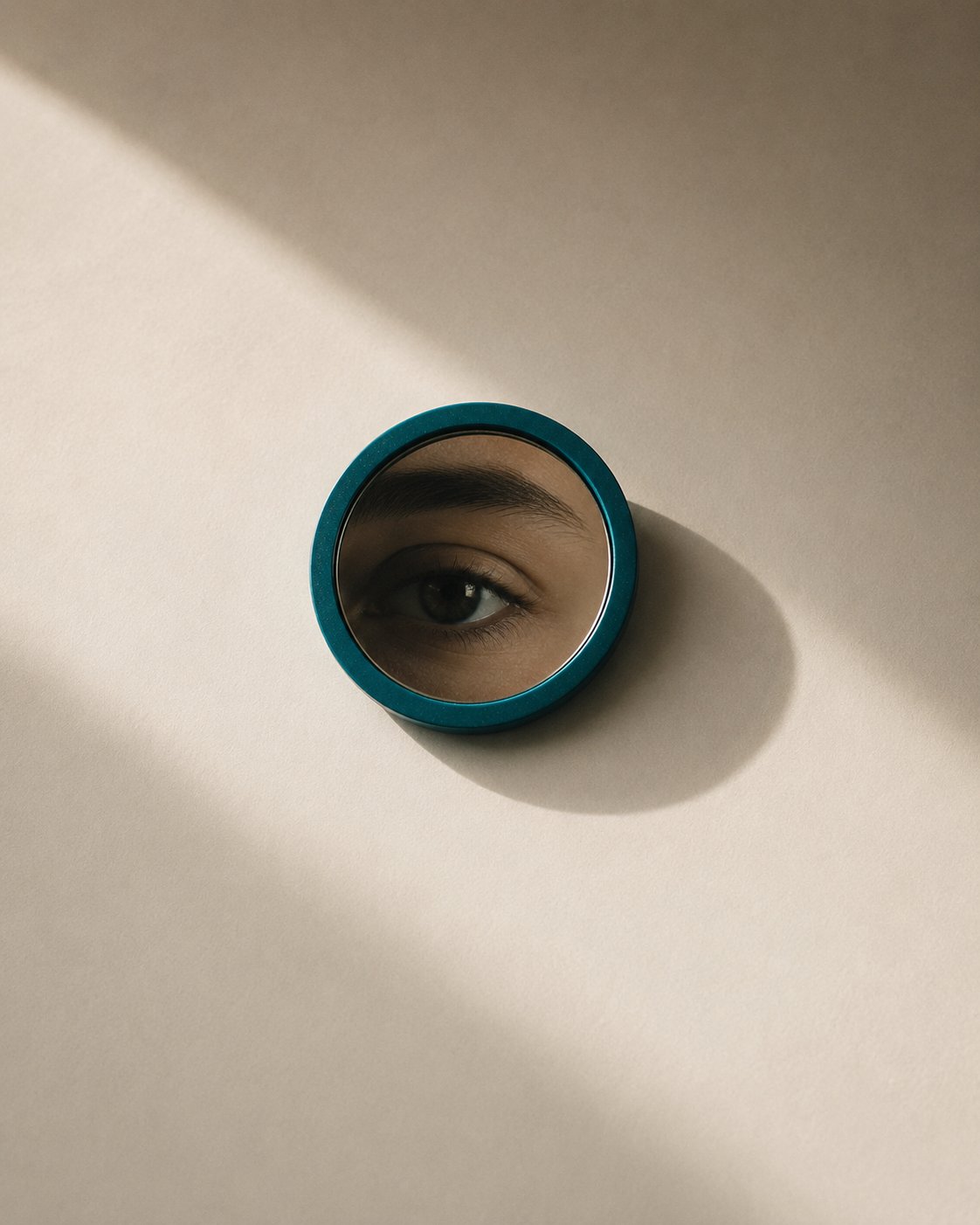
Y quizás esa incomodidad — esa negativa a apartar la mirada de ti misma — es lo más cercano al crecimiento que sé nombrar.
And maybe that discomfort — that refusal to look away from yourself — is the closest thing to growth I know how to name.