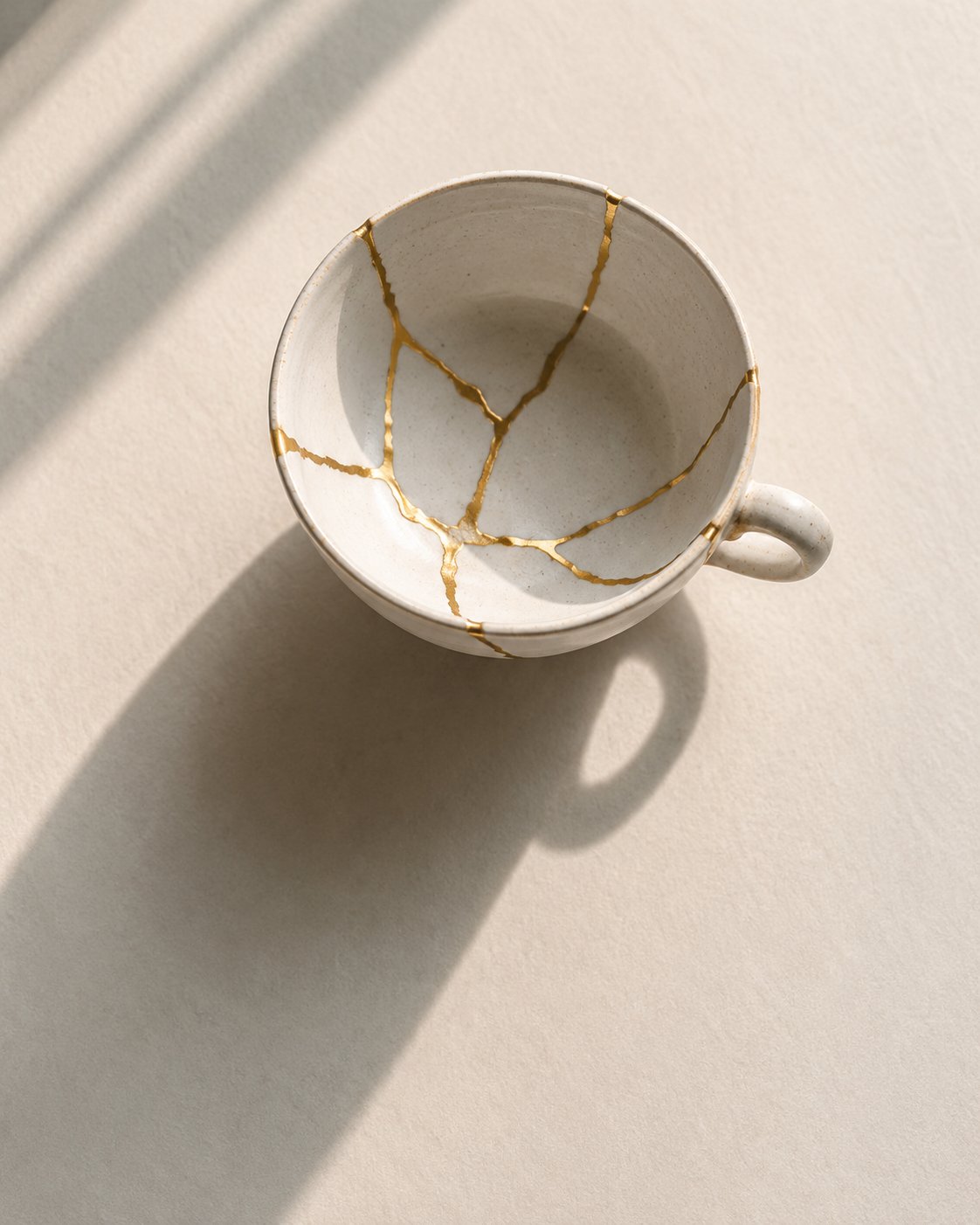
Hay semanas que no se rompen de golpe. Se doblan.
There are weeks that don't break all at once. They bend.
Un día decides algo que no querías decidir. Al siguiente lo repites. Luego lo explicas. Y cuando te das cuenta, la semana ya no se parece a lo que habías pensado. No falla la meta. Falla la forma en que te hablas cuando algo se descarrila.
One day you decide something you didn't want to decide. The next day you repeat it. Then you explain it. And by the time you notice, the week no longer looks like what you had pictured. It's not the goal that fails. It's the way you talk to yourself when something goes off the rails.
Lo que hacía antesWhat I used to do
Durante mucho tiempo, cuando una semana se rompía, hacía una de dos cosas: o me exigía más, o la daba por perdida. Ninguna funcionaba. Exigirme más me llevaba a rigidez. Abandonar me llevaba a repetir el patrón.
For a long time, when a week broke, I did one of two things: either I demanded more of myself, or I gave it up for lost. Neither worked. Demanding more led me to rigidity. Giving up led me to repeat the pattern.
Lo que empecé a notarWhat I began to notice
La mayoría de las semanas no se rompen por falta de disciplina. Se rompen porque algo pidió ser protegido y no lo vimos a tiempo. Cansancio. Duda. Evasión. Miedo a perder el control. No son fallas morales. Son señales.
Most weeks don't break from lack of discipline. They break because something asked to be protected and we didn't see it in time. Tiredness. Doubt. Avoidance. Fear of losing control. They aren't moral failings. They're signals.
Lo que hago ahoraWhat I do now
Cuando una semana se rompe, ya no intento "arreglarla". Hago algo más simple —y más incómodo—: la investigo. No empiezo por el error grande. Empiezo por la primera concesión. El momento en que algo se sintió ligeramente fuera de lugar y decidí ignorarlo.
When a week breaks, I no longer try to "fix it." I do something simpler —and more uncomfortable—: I investigate it. I don't start with the big mistake. I start with the first concession. The moment something felt slightly out of place and I decided to ignore it.
¿Qué estaba intentando proteger cuando decidí eso?
What was I trying to protect when I decided that?
La respuesta rara vez es flojera. Casi siempre es cuidado mal dirigido. Después no prometo nada. No me hago discursos. No compenso. Solo cambio una cosa pequeña para la semana que sigue. No todo. No la vida. Una estructura mínima.
The answer is rarely laziness. It's almost always misdirected care. Afterward I promise nothing. I don't give myself speeches. I don't compensate. I just change one small thing for the week that follows. Not everything. Not life. A minimal structure.
No para hacerlo perfecto. Para no repetirlo igual. Hay semanas que se rompen y aun así enseñan más que las que salen "bien". La diferencia no está en evitar la ruptura, sino en no convertirla en identidad.
Not to do it perfectly. To not repeat it the same way. There are weeks that break and still teach more than the ones that turn out "fine." The difference isn't in avoiding the break, but in not turning it into identity.
Tool Box — Para semanas rotasTool Box — For broken weeks
¿Dónde fue la primera concesión? ¿Qué ignoré cuando todavía era pequeño?
Where was the first concession? What did I ignore while it was still small?
¿Qué estaba intentando cuidar en realidad? ¿Qué forma más honesta de cuidado existe?
What was I really trying to take care of? What more honest form of care exists?
Una sola decisión: La próxima semana cambio ________.
A single decision: Next week I change ________.
Si intentas compensar, detente. No se compensa una semana rota: se reancla.
If you try to compensate, stop. A broken week isn't compensated: it's re-anchored.